White Paper 1 | 11/27/2025
Baljit Singh, Founding Member, Guru Nanak Dev Global University
2201 Long Prairie Road, Suite 107-712, Flower Mound, TX 75022
Email: bsingh@gndgu.com
Executive Summary
Gurmukhi Punjabi—both the script and the language—fulfils every criterion for classical language recognition in India. Originating with the Sikh Gurus, who formalized it in the 16th century to preserve spiritual teachings and expand literacy, Gurmukhi anchors Sikh scripture, is the exclusive script of the Guru Granth Sahib, and maintains a literary tradition spanning over a thousand years.
Yet Punjabi remains excluded from India’s classical languages. This paper sets out clear, evidence-backed reasons why Punjabi qualifies under all established criteria—antiquity, literary value, originality, and historical significance. Recognizing Punjabi’s classical status is urgent, given its unmatched role in cultural, spiritual, and educational domains. This paper details the evidence and explains the overdue policy implications.
1. Introduction
Punjabi is spoken by over 150 million people in India, Pakistan, and globally.1 Its main script, Gurmukhi, is essential to Sikh practice and the Panjab region. This paper integrates the historical, sacred, linguistic, and literary dimensions of Gurmukhi Punjabi to demonstrate why it qualifies as classical and to strengthen cultural policy and preservation.
2. Historical Development of Gurmukhi
The development of Gurmukhi can be traced through a long chain of writing traditions in South Asia. Early influences include Brahmi, Sharada, and various Laṇḍā scripts used in medieval Punjab.2 By the 10th to 15th centuries, transitional forms such as Dēvāśēṣa and Proto-Gurmukhi were in use, taking shape in a cultural landscape that included Nath Yogi teachings and early Sufi poetry.3
The most decisive moment came in the 16th century, when Guru Angad Dev Ji standardized Gurmukhi. His goal was twofold: preserve Guru Nanak Dev Ji’s message and expand access to literacy. The paintī akhar, meaning the 35 core letters of the alphabet, form the backbone of the script he refined. Early education centers linked to gurdwaras, which are Sikh places of worship and community, helped spread literacy and provided an early model of community-based learning.
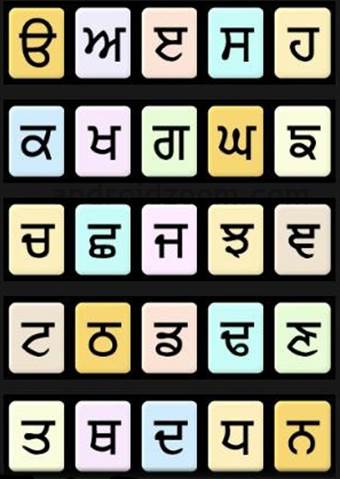
Picture 1: Painti Akhri ‘Gurmukhi alphabet’
(source: https://www.sikhiwiki.org/index.php/Gurmukhi)
Prior to this standardization, scripts such as Shahmukhi and Laṇḍā filled administrative and literary roles, but they were either too specialized or too limited for broad public use. Gurmukhi changed that. Under Maharaja Ranjit Singh, the script gained wide administrative legitimacy.4 Today, it remains the official script of the state of Punjab and continues to support large-scale educational and cultural programs.
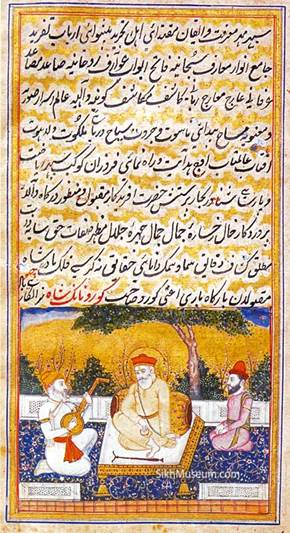
Picture 2: A folio from the Military Manual of Maharaja Ranjit Singh. Urdu script was traditionally used as the administrative language of the Sikh Empire as it was in the Mughal Empire as well.
(Source: https://sikhmuseum.com/words/manuscripts/manuscript8.html)
3. The Sacredness of Gurmukhi
For Sikhs, Gurmukhi is not just a writing system. It is the channel through which the Guru’s voice is experienced. Every word of the Guru Granth Sahib—the Sikh scripture compiled in 1604 and declared the eternal Guru in 1708—is written in Gurmukhi. This 1,430-page (Ang) text brings together 5,894 compositions by Sikh Gurus, Bhakti saints (devotional poets from a spiritual movement)5, and Sufi thinkers (Islamic mystics), blending Old Punjabi with elements of Persian, Hindi, and regional dialects.
The paintī akhar are revered as foundational sounds that support focus and spiritual grounding in recitation. Learning the script is both a discipline and a form of devotion, practiced in gurdwaras worldwide. This connection has sustained Sikh identity through political upheaval, including the Mughal and British eras, and remains central to Sikh memory, worship, and cultural continuity.
4. Linguistic Features of Gurmukhi Punjabi
Gurmukhi Punjabi is a structurally rich language that exhibits the features typically associated with classical traditions.
The script is designed around 35 primary consonants, each with an inherent vowel, and a set of vowel signs that modify sound. Additional characters—such as ਸ਼ for /ʃ/ (the “sh” sound) and ਫ਼ for /f/ (the “f” sound)—allow the script to reflect Persian and Arabic influences without distorting Punjabi grammar or phonology (the sound system of the language).
Punjabi is a tonal language, with high, low, and neutral tones.7 Gurmukhi captures these tones using a combination of specific letters, diacritics (marks added to letters), and subscripts (small marks below letters). Signs such as the adhak (ੱ, which doubles consonant sounds) and the bindi (ੰ, indicating nasalization) give the script precision and consistency, especially in oral recitation.6
The retroflex sound ੜ (pronounced /ɽ/, a rolling “r” made by curling the tongue back), retained from earlier Prakrit forms (ancient Indian languages), is a notable example of its continuity with ancient linguistic traditions.8 The overall spelling system closely mirrors spoken Punjabi, making learning and teaching more intuitive and supporting long-form poetic and narrative traditions.
5. Classical Merits and Literary Influence
Punjabi has a historical span comparable to other classical languages recognized by the Government of India. Its development from Paishachi Prakrit and Shauraseni Apabhraṃśa between the 7th and 10th centuries gives it an antiquity comparable to that of Marathi, Assamese, and Bengali, all of which were granted classical status in 2024.
Early literary traditions include: Nath Yogi compositions (sacred poetry by ascetic mystic practitioners from the 9th to 14th centuries); poetry linked to Baba Sheikh Farid (12th–13th century), an early Sufi (Islamic mystic); early qissas, such as Damodar’s Heer (c. 1550), which are love epics; and a rich body of Sufi-Punjabi epics.9
Gurmukhi has carried this body of work into the modern era, and the script continues to support contemporary literature by authors such as Amrita Pritam, Shiv Kumar Batalvi, and Nanak Singh. Punjabi also thrives in folk music, film, and global diaspora culture. Since 1991, Unicode support has accelerated its digital presence, opening new avenues for publishing and global instruction.10
At the same time, Punjabi faces serious threats. The spread of Hindi and Urdu in key sectors, together with migration, demands urgent policy intervention to preserve and promote Punjabi’s classical heritage. The quest for classical status is practical rather than symbolic; it directly shapes cultural and educational planning.
6. Direct Case for Classical Language Status
India now recognizes eleven classical languages. The original group—Tamil, Sanskrit, Kannada, Telugu, Malayalam, and Odia—was expanded in October 2024 with the addition of Marathi, Bengali, Assamese, Pali, and Prakrit. Together, they form a category reserved for languages that demonstrate exceptional historical depth, a distinct and self-generated literary tradition, and a corpus of ancient texts regarded as culturally significant. This designation reflects not only linguistic antiquity but also the enduring value these languages have contributed to India’s intellectual and civilizational heritage.11
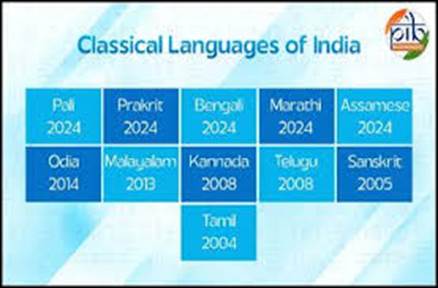
Picture 3: Classical Languages of India
(Source: Government of India publications)
How Punjabi Meets the Government of India’s Criteria
The Ministry of Culture uses a set of clear criteria—established in 2004–05 and updated in 2024—to determine classical language status. Punjabi meets each criterion and, in several cases, exceeds the evidence available for languages already granted recognition.
Below is a condensed summary of compliance:
Criterion 1: Antiquity (1,500–2,000 years)
Punjabi’s earliest layers appear in:
• Nath Yogi dohas (9th–14th century)
• Sheikh Farid’s poetry (12th–13th century)
• Quotations of Punjabi in Sanskrit texts (12th century)
This places Punjabi within the same antiquity range used to evaluate and approve other classical languages.
Criterion 2: A body of ancient literature valued across generations
Punjabi’s literary corpus includes:
• Guru Granth Sahib (5,894 hymns, widely recited for over 400 years)
• Dasam Granth
• Vaaran of Bhai Gurdas
• Janamsakhis
• Early qissa and Sufi traditions
This body is both extensive and culturally central.
Criterion 3: Distinct and original literary tradition
Punjabi evolved from local Prakrits and the Laṇḍā/Takri script line. Its poetic structures, meters, and genres—such as qissa and baint—are rooted in the region rather than borrowed from elsewhere.12
Criterion 4: Clear distinction between classical and modern forms
The differences between older Sadhukkadi/Sant Bhasha (composite literary languages used in medieval North Indian spiritual poetry) and modern Punjabi are significant in vocabulary, grammar, and phonology, matching the “classical vs. modern” requirement applied to other languages.13
Comparative Antiquity
Punjabi’s earliest layers are older than those of Marathi and Assamese, and are broadly comparable to Bengali. All three languages received classical recognition in 2024; Punjabi did not.11
Civilizational Contributions
Punjabi and Gurmukhi have made major contributions to philosophy, music, literacy, and social reform, including:
• The principle of Ik Onkar and social equality
• Preservation and systematization of classical ragas
• A centuries-old model of community-based education
• The unique status of a living scripture considered an eternal Guru
Political and Equity Factors
The Punjab Legislative Assembly has passed multiple resolutions calling for classical status, and the request has been supported by scholars and institutions across political lines.14 Given the historical record, granting status corrects an inconsistency rather than offering special preference.
Conclusion
Gurmukhi Punjabi is a sacred script and classical tradition with deep historical roots. Its structure, literature, and impact rival those of languages already recognized by the Government of India. From Guru Angad’s standardization to its scriptural centrality and millennium of literature, Gurmukhi Punjabi displays lasting creativity and identity.
Awarding classical status would honor Gurmukhi Punjabi’s legacy and enable expanded cultural, educational, and policy initiatives. It would also reaffirm India’s commitment to linguistic diversity and justice.
References:
- Punjabi language | Origins, Writing System & Dialects. Encyclopedia Britannica. https://www.britannica.com/topic/Punjabi-language
- Gurmukhi. Wikipedia. https://en.wikipedia.org/wiki/Gurmukhi
- Gurmukhi – SikhiWiki, free Sikh encyclopedia. SikhiWiki. https://www.sikhiwiki.org/index.php/Gurmukhi
- Military Manual. Maharaja Ranjit Singh Museum, Amritsar. https://sikhmuseum.com/words/manuscripts/manuscript8.html
- Sri Guru Granth Sahib Ji. panthkhalsa.tripod.com/SriGuruGranthSahibJi.htm. https://panthkhalsa.tripod.com/SriGuruGranthSahibJi.htm
- https://www.newworldencyclopedia.org/entry/Gurmukh%C4%AB_script
- Setia, Aditya, N., Jha, S. K. & K., S. (2020). Assessing the Tonality of Punjabi Language. International Journal of Innovations in TESOL and Applied Linguistics 6. https://www.ijital.org/images/issues/issue-21/2.pdf
- Phonological history of Hindustani. https://en.wikipedia.org/wiki/Phonological_history_of_Hindustani
- Saloks of Sheikh Farid. https://www.sikhiwiki.org/index.php/Saloks_of_Sheikh_Farid
- The Unicode Standard, Version 1.0. Unicode Standard, Version 1.0. (1991) https://www.unicode.org/versions/Unicode1.0.0/#:~:text=Version%201.0%20of%20the%20Unicode%20Standard%20consists%20of%20the%20core%20specification%2C%20The%20Unicode%20Standard&text=0%2C%20published%20in%20October%2C%201991.
- History of Punjabi Language; Gurmukhi Alphabet. apnaorg.com. https://apnaorg.com/articles/alphabet/index.shtml
- Sant Bhasha. https://en.wikipedia.org/wiki/Sant_Bhasha
- Punjab Assembly passes resolution to make Punjabi language mandatory in state govt institutions (2020). https://www.hindustantimes.com/chandigarh/house-passes-resolution-for-making-punjabi-compulsory-till-class-10/story-T4FoWDUZ1YqVdMeLonfYKJ.html#:~:text=Games-,House%20passes%20resolution%20for%20making%20Punjabi%20compulsory%20till%20Class%2010,by%20an%20individual%20or%20undertaking.
——————