WEEK 9 | NEXUS-SEMICON | 52-Week Semiconductor Career Development Program
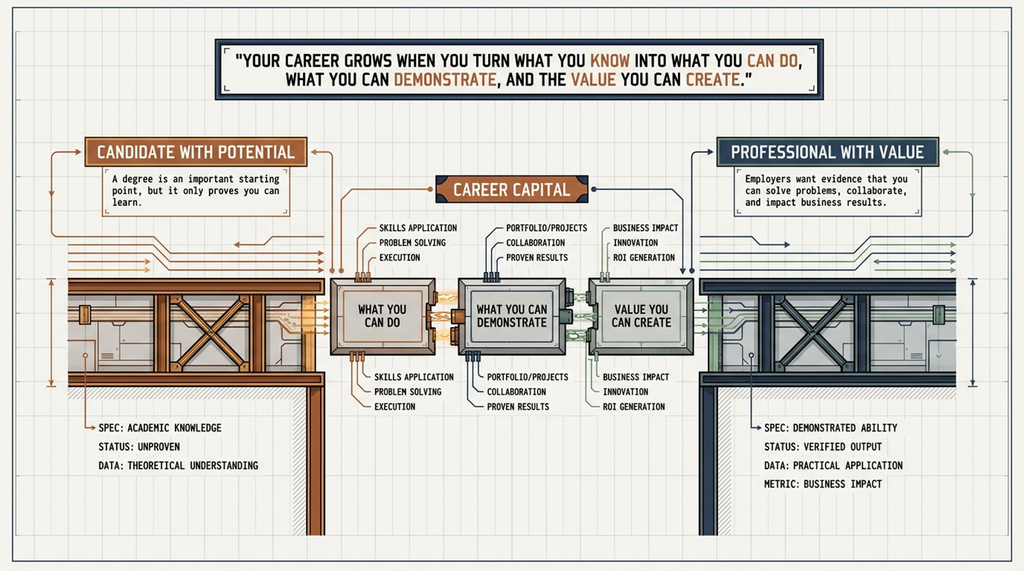
Your career grows when you turn what you know into what you can do, what you can demonstrate, and the value you can create.
1. Introduction: What Is Career Capital?
Career capital is the collection of knowledge, skills, experiences, accomplishments, relationships, and professional credibility that makes you valuable in the workplace.
In the semiconductor industry, having a degree is an important starting point, but employers also want evidence that you can solve problems, work with technology, collaborate across teams, and contribute to business results.
For example, knowing the fundamentals of semiconductor manufacturing is valuable. Demonstrating that knowledge through a fabrication process project, a device simulation, a technical presentation, or an internship makes your capability more visible.
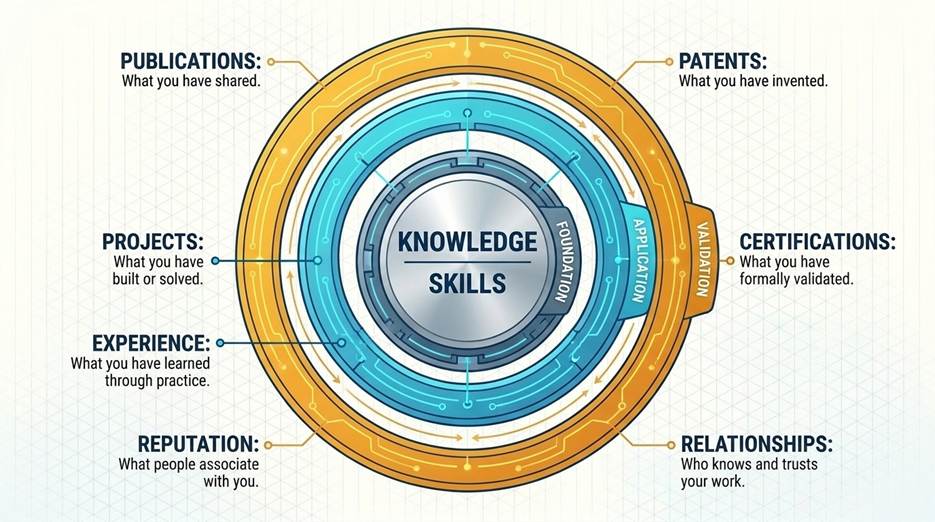
The goal is not simply to collect qualifications. It is to build a portfolio of evidence that demonstrates your ability to create value.
2. Why Career Capital Matters
Career capital helps you move from being a candidate who claims to have potential to a professional who can demonstrate capability.
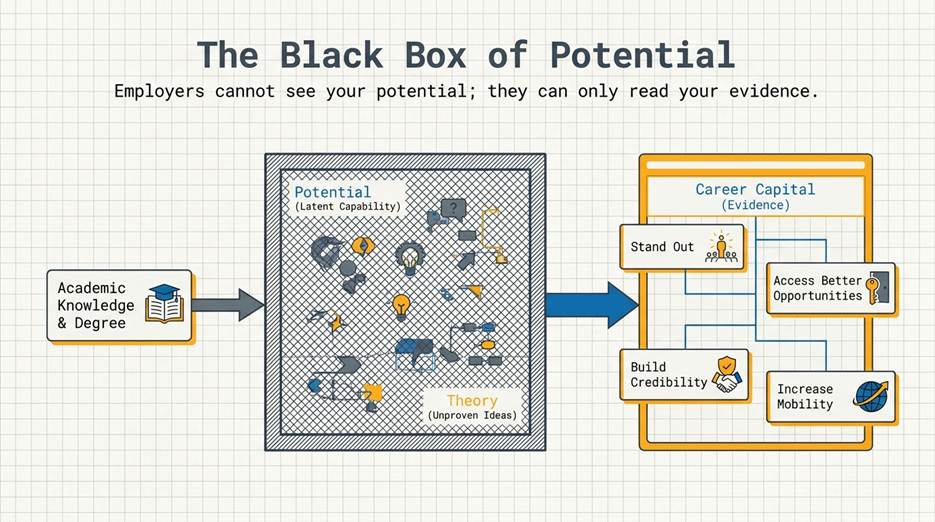
It can help you:
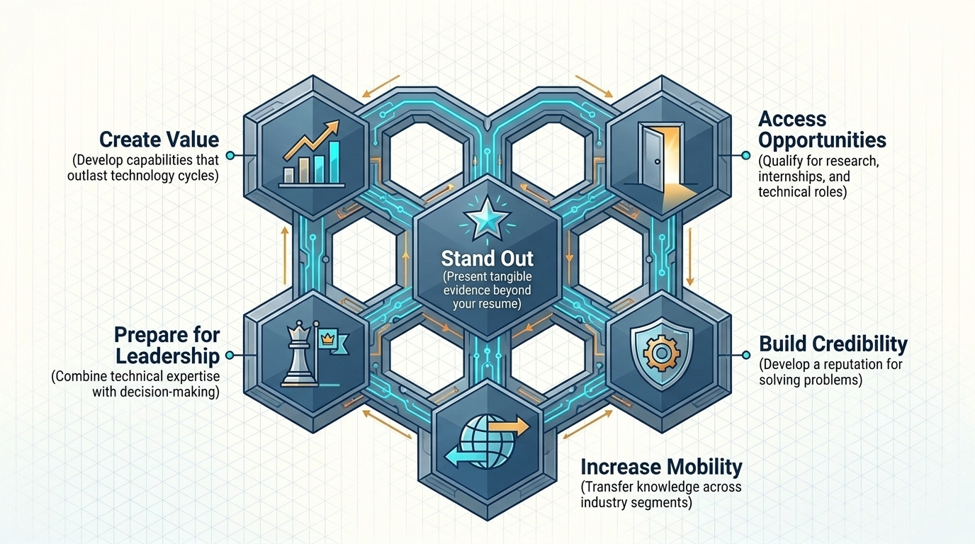
- Stand out to employers: Present tangible evidence of your skills beyond your resume.
- Access better opportunities: Qualify for internships, research positions, technical assignments, and leadership responsibilities.
- Build professional credibility: Develop a reputation for delivering results and solving problems.
- Increase career mobility: Transfer your knowledge and experience across roles, companies, and semiconductor industry segments.
- Prepare for leadership: Combine technical expertise with communication, collaboration, and decision-making skills.
- Create long-term value: Develop capabilities that remain useful as technologies, products, and business models evolve.
Think of career capital as a long-term investment. Every project completed, skill demonstrated, relationship developed, and meaningful result documented can strengthen your professional profile.
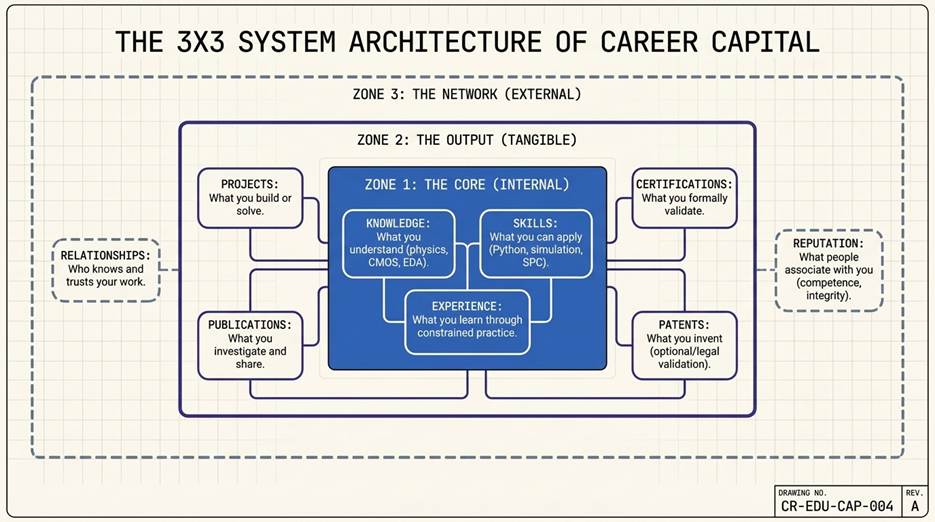
3. The Nine Components of Career Capital
1. Knowledge – What You Understand
Knowledge is your understanding of the concepts, principles, technologies, and systems relevant to your career.
In semiconductors, this may include semiconductor physics, CMOS technology, lithography, device fabrication, packaging, test engineering, and electronic design automation (EDA).
Build it: Complete structured courses, study technical publications, and explain complex concepts in your own words.
2. Skills – What You Can Do
Skills are your ability to apply knowledge to real tasks and problems.
Examples include Python programming, circuit simulation, statistical process control, data analysis, failure analysis, design verification, and technical communication.
Build it: Practice consistently, solve realistic problems, and produce work that others can review.
3. Projects – What You Have Built or Solved
Projects demonstrate how you apply knowledge and skills to achieve a defined outcome.
Examples include designing a simple digital circuit, analyzing wafer yield data, simulating a semiconductor device, or developing a test automation script.
Build it: Complete projects with clear objectives, documented methods, measurable outcomes where possible, and lessons learned.
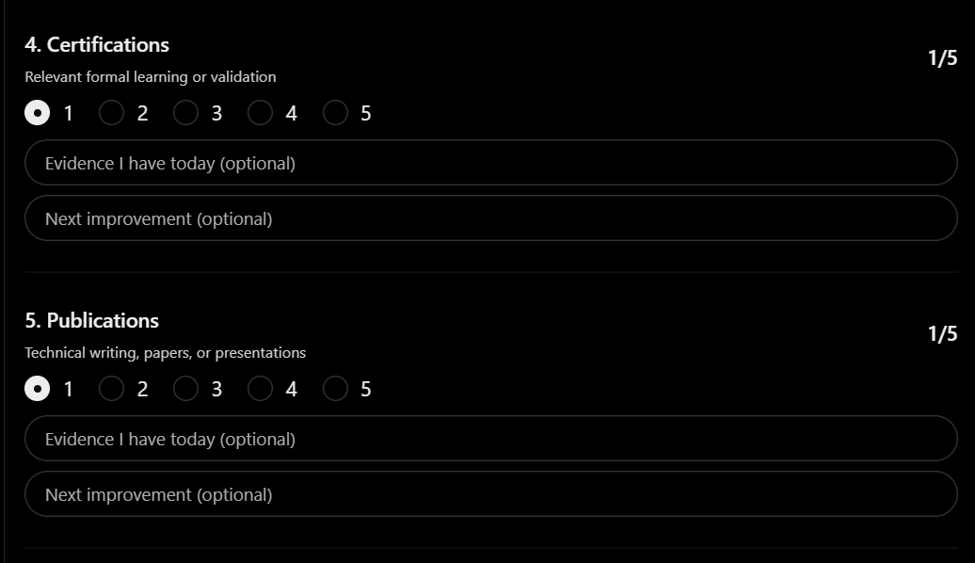
4. Certifications – What You Have Formally Validated
Certifications can demonstrate structured learning or proficiency in a particular area.
Examples may include relevant EDA tool training, quality management, Lean Six Sigma, data analytics, or semiconductor process training.
Build it: Select certifications based on your target role, employer expectations, and the practical skills they help you develop. Avoid collecting certificates without applying what you learn.
5. Publications – What You Have Shared
Publications show your ability to investigate questions, organize technical information, and communicate findings.
Examples include research papers, conference presentations, technical articles, literature reviews, and documented engineering case studies.
Build it: Write about a problem you investigated, explain your methodology, cite sources accurately, and share your work through appropriate professional channels.
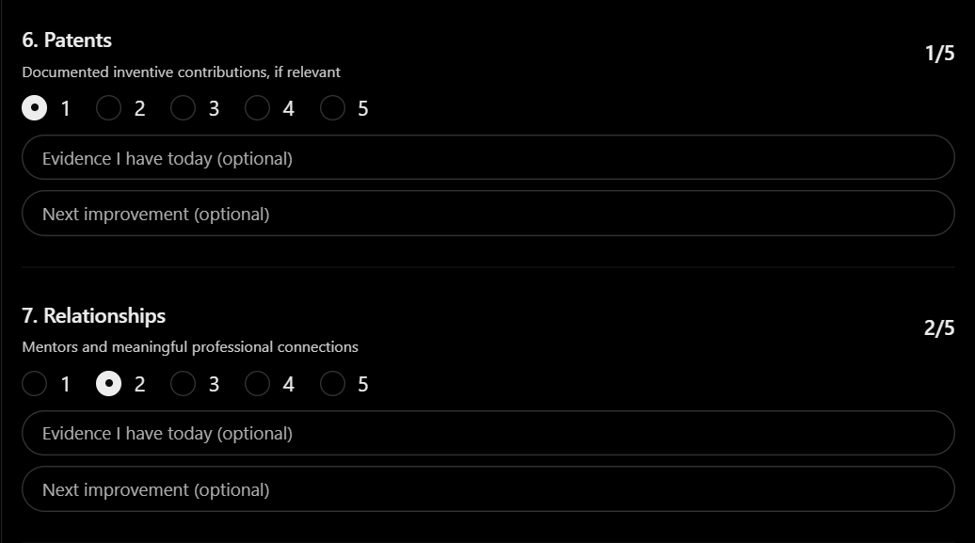
6. Patents – What You Have Invented
Patents may demonstrate original technical innovation when an invention meets applicable legal requirements.
Examples could involve novel device structures, fabrication processes, packaging methods, or test techniques.
Build it: Learn the basics of intellectual property, document inventive contributions appropriately, and collaborate with qualified patent professionals when needed. A patent is not a requirement for every technical career.
7. Relationships – Who Knows and Trusts Your Work
Professional relationships connect you with mentors, colleagues, researchers, recruiters, managers, and industry experts.
Build it: Participate in technical communities, maintain relationships with professors and colleagues, attend industry events, and contribute meaningfully to discussions.
8. Reputation – What People Associate With You
Your reputation reflects how others experience your competence, integrity, reliability, and professional conduct.
Build it: Meet commitments, communicate clearly, acknowledge mistakes, support teammates, and consistently deliver quality work.
9. Experience – What You Have Learned Through Practice
Experience develops through applying knowledge in real or realistic environments, handling constraints, and learning from outcomes.
Examples include internships, laboratory research, manufacturing assignments, design projects, quality investigations, and cross-functional work.
Build it: Seek practical assignments, document your contributions, request feedback, and reflect on what each experience teaches you.
4. Understand the Difference Between Learning and Evidence
One of the biggest career-development mistakes is confusing activity with achievement.
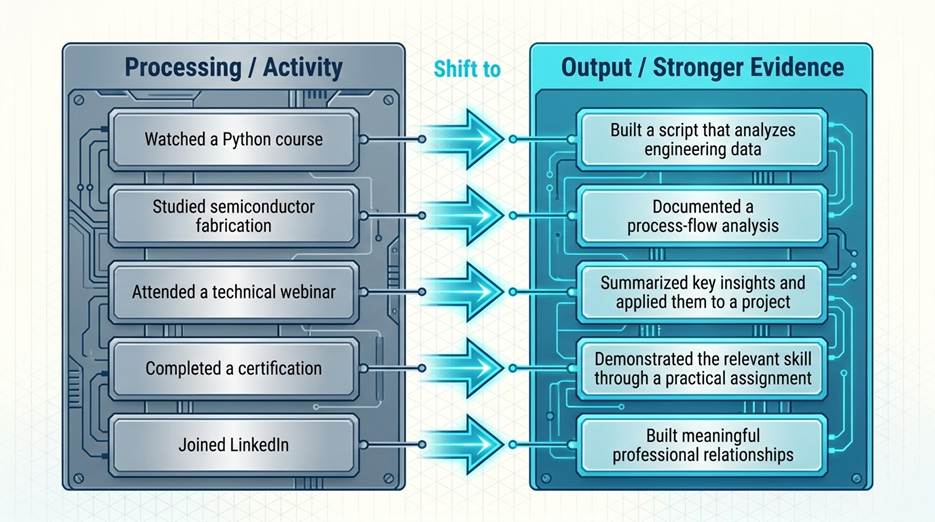
| Career activity | Stronger evidence of capability |
| Watched a Python course | Built a script that analyzes engineering data |
| Studied semiconductor fabrication | Documented a process-flow analysis |
| Attended a technical webinar | Summarized key insights and applied them to a project |
| Completed a certification | Demonstrated the relevant skill through a practical assignment |
| Joined LinkedIn | Built meaningful professional relationships |
| Participated in a team project | Documented your contribution and the outcome |
| Read research papers | Produced a literature review or research presentation |
The lesson is simple: learning creates potential; evidence makes that potential visible.
You do not need to publish a paper, obtain a patent, or earn multiple certifications to build a strong career. Your evidence should match your chosen career path.
5. Build Career Capital for Your Target Semiconductor Role
Your career capital should be aligned with the work you want to do.
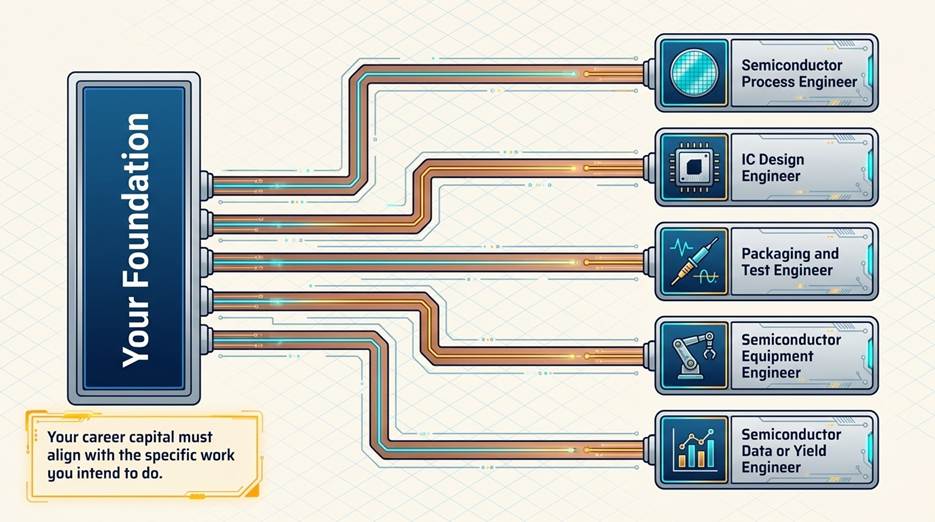
Semiconductor Process Engineer
Build knowledge of fabrication processes, process integration, statistical process control, and root-cause analysis.
Evidence to develop: A documented process-flow study, yield-analysis project, or process-improvement case study.
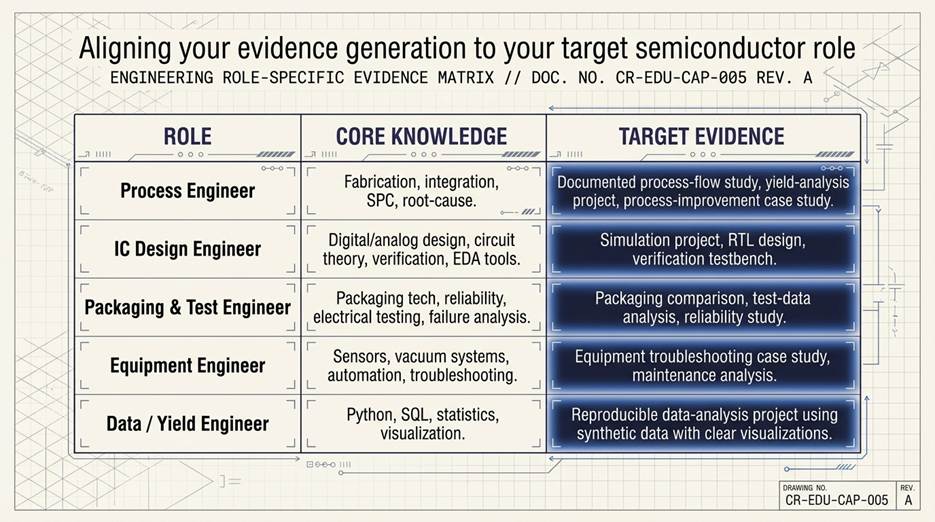
IC Design Engineer
Build knowledge of digital or analog design, circuit theory, verification, and relevant EDA tools.
Evidence to develop: A simulation project, RTL design, verification testbench, or documented circuit-design portfolio.
Packaging and Test Engineer
Develop knowledge of packaging technologies, reliability, electrical testing, thermal behavior, and failure analysis.
Evidence to develop: A packaging comparison, test-data analysis, reliability study, or failure-analysis report.
Semiconductor Equipment Engineer
Focus on equipment fundamentals, sensors, vacuum systems, automation, maintenance, and troubleshooting.
Evidence to develop: An equipment troubleshooting case study, maintenance analysis, or sensor-monitoring project.
Semiconductor Data or Yield Engineer
Develop Python, SQL, statistics, visualization, experimental analysis, and yield-management skills.
Evidence to develop: A reproducible data-analysis project using public or synthetic data, with clear findings and visualizations.
These are examples, not mandatory requirements. Choose projects that fit your interests, available tools, and the roles you intend to pursue.
6. Activity: Build Your Personal Career Capital Scorecard
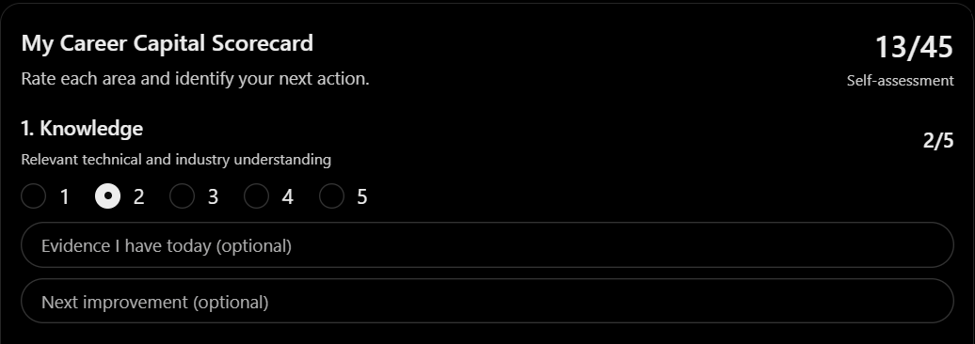
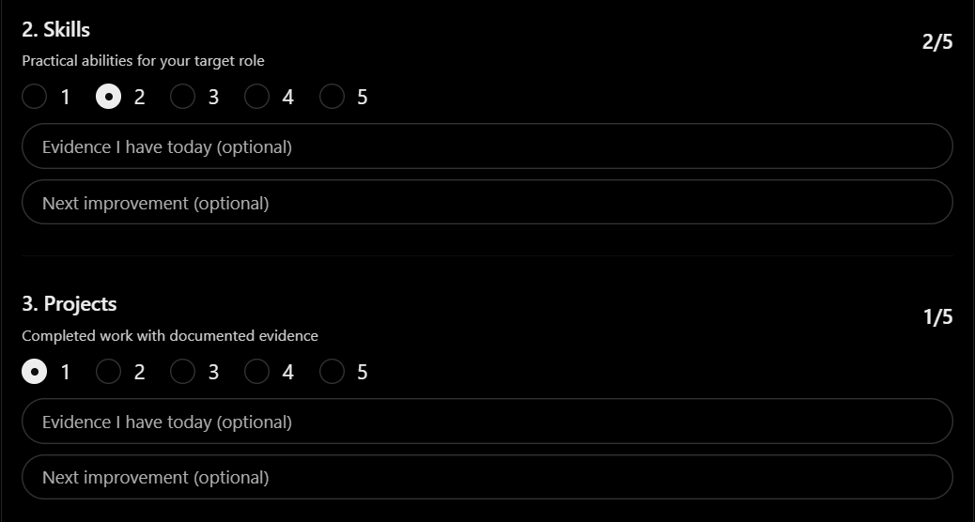
Your scorecard is a practical assessment of where you stand today and where you need to improve.
Rate each component using the following scale:
- 1 – Beginning: Little or no evidence yet.
- 2 – Developing: Some learning or initial evidence.
- 3 – Competent: Can demonstrate capability independently in relevant tasks.
- 4 – Strong: Has repeated evidence, meaningful outcomes, or recognized expertise.
- 5 – Exceptional: Has substantial evidence of impact, leadership, or recognized contributions.
These scores are for personal reflection, not an industry-standard assessment. A low score is not a failure; it identifies where you can make progress.
How to interpret your scorecard
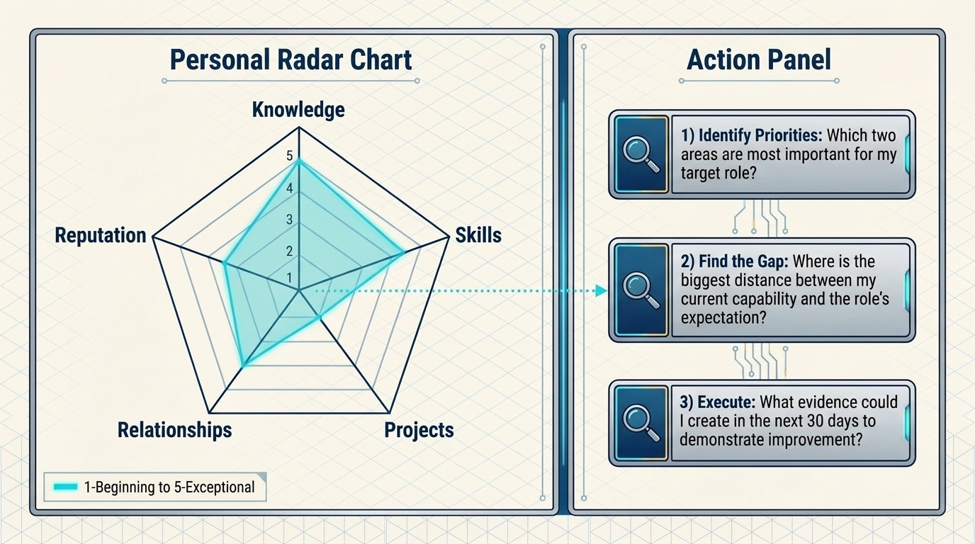
Do not focus only on the total. Ask three questions:
- Which two areas are most important for my target role?
- Which area has the biggest gap between my current capability and the role’s expectations?
- What evidence could I create in the next 30 days to demonstrate improvement?
For example, an aspiring design engineer might have strong knowledge but limited project evidence. A practical design-and-verification project may be more valuable than another introductory course.
7. The 12-Month Career Capital Plan
A good career plan converts your self-assessment into measurable actions.
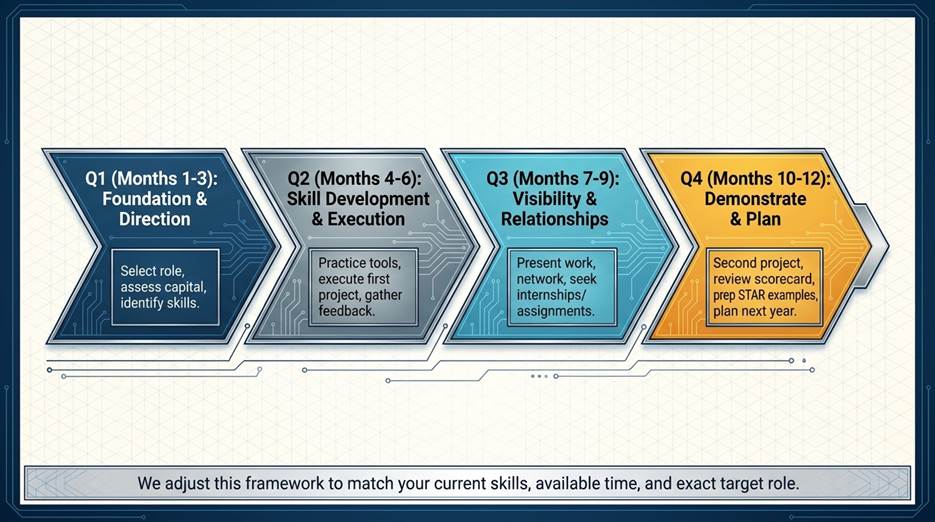
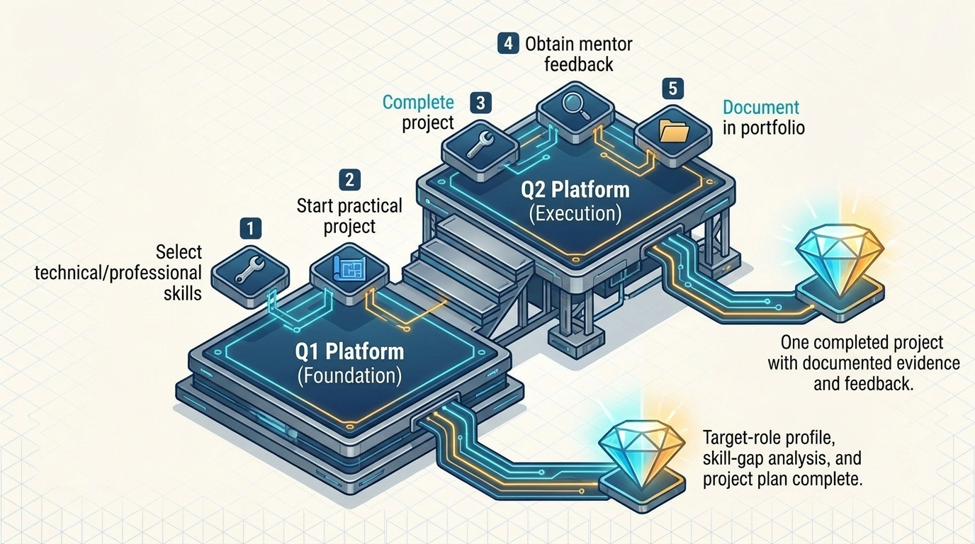
Q1 | Months 1–3
Foundation and Direction
- Select one target role or career pathway.
- Review relevant job descriptions and identify recurring skills.
- Assess your current career capital.
- Choose two technical skills and one professional skill to develop.
- Start one practical project.
Milestone: A target-role profile, skill-gap analysis, and project plan.
Q2 | Months 4–6
Skill Development and Execution
- Complete the first project.
- Practice your selected tools or technical methods.
- Obtain feedback from a professor, mentor, or experienced engineer.
- Pursue a relevant certification only if it supports your goals.
- Document results in a portfolio.
Milestone: One completed project with documented evidence and feedback.
Q3 | Months 7–9
Visibility and Professional Relationships
- Present your work to peers or a professional community.
- Build meaningful relationships with engineers and researchers.
- Develop a technical article, poster, or presentation where appropriate.
- Seek an internship, research opportunity, or stretch assignment.
- Improve your resume and professional profile using evidence.
Milestone: A stronger professional portfolio and a record of relevant industry engagement.
Q4 | Months 10–12
Demonstrate Capability and Plan the Next Step
- Complete a second project or extend the first into a more advanced project.
- Review your progress against the scorecard.
- Prepare examples of your contributions using the STAR method.
- Apply for appropriate opportunities or seek greater responsibility.
- Set priorities for the next 12 months.
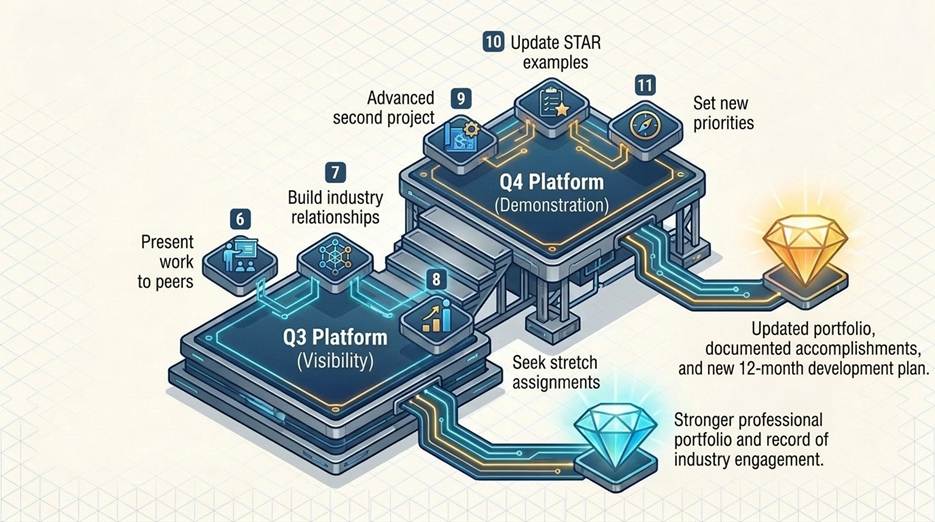
Milestone: An updated portfolio, documented accomplishments, and a new career-development plan.
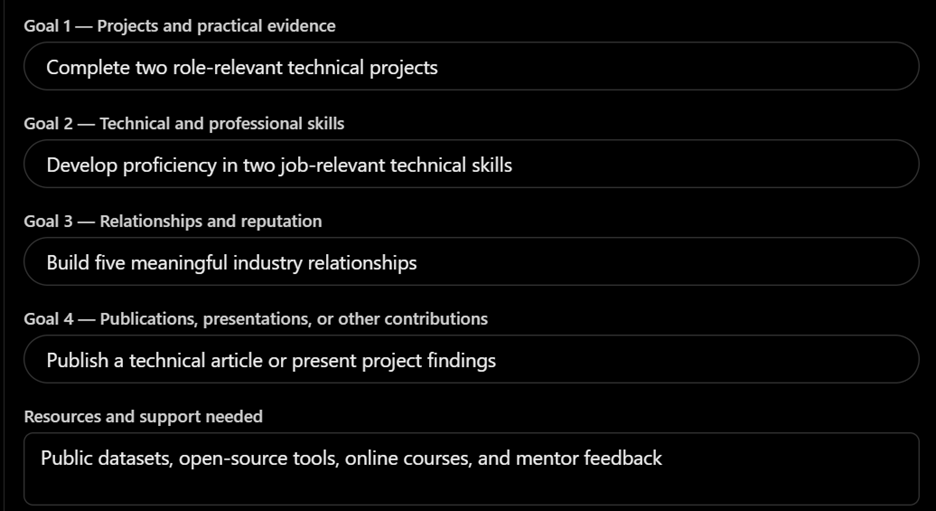
8. Create Your Personal 12-Month Career Capital Plan
We at Guru Nanak Global University and Fab Guardians, create a journey for 2 years for a certification program. During the first year, we build the foundation based on the below framework tailored to your aspirations.
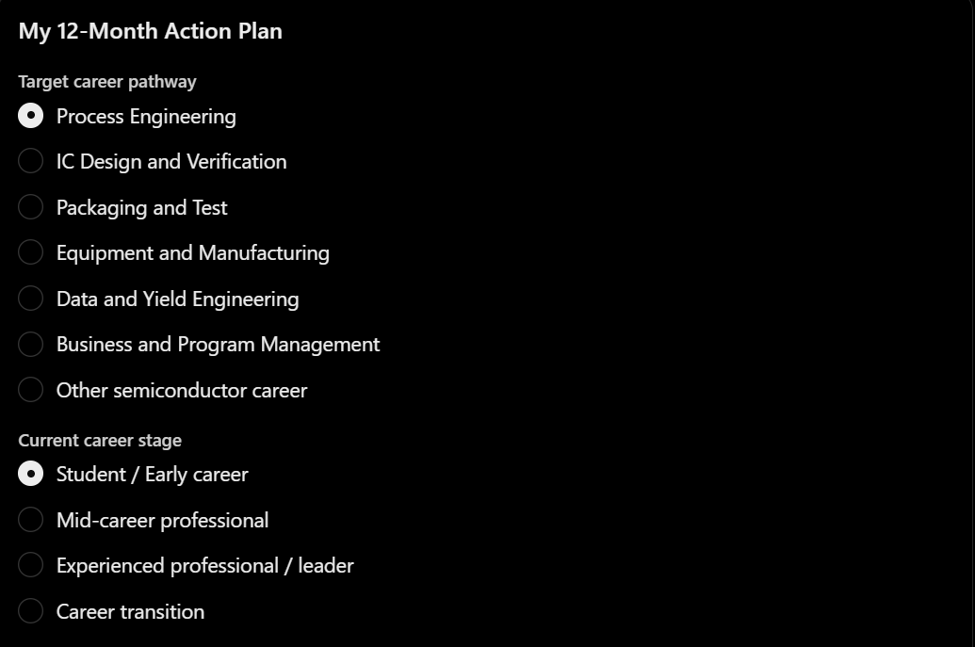
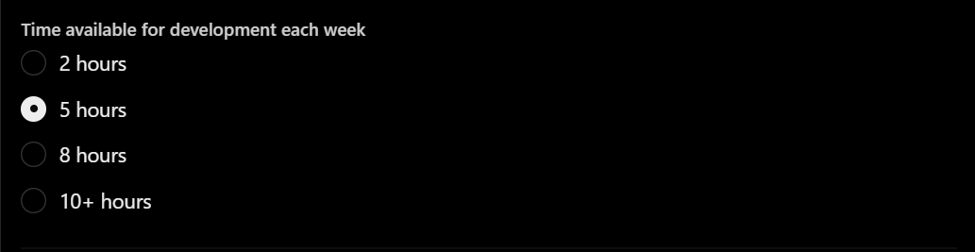
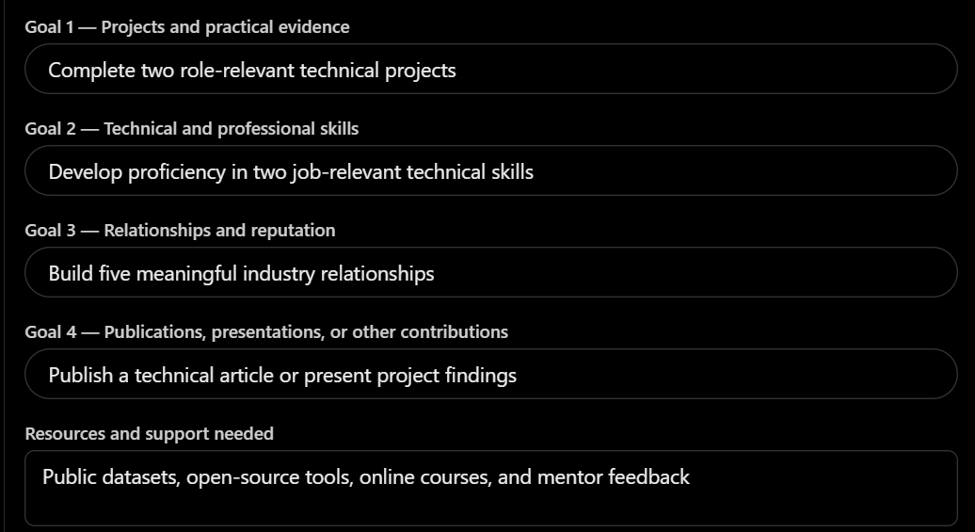
The starting goals are examples. We adjust them to match your role, current skills, available time, and opportunities.
9. Measure Progress With Evidence, Not Activity Alone
At the end of every month, review what you have actually produced.
| Area | Example 12-month target | Evidence of progress |
| Knowledge | Master 2 priority technical topics | Study notes, assessments, technical explanations |
| Skills | Demonstrate 2–3 job-relevant skills | Practical exercises, code, simulations, test results |
| Projects | Complete 2 substantial projects | Reports, designs, documented outcomes |
| Certifications | Complete 0–2 relevant certifications, if useful | Verified completion and applied skills |
| Publications | Create 1 technical article or presentation | Published article, slides, or conference submission |
| Patents | Explore invention disclosure if appropriate | Documented invention assessment, if applicable |
| Relationships | Develop 5–10 meaningful professional connections | Follow-up conversations and mutually useful engagement |
| Reputation | Deliver consistently on commitments | Feedback, references, repeat responsibilities |
| Experience | Pursue 1 practical opportunity | Internship, research, work assignment, or equivalent project |
These targets are illustrative, not universal benchmarks. Patent activity is optional, and publication goals should suit your role and career stage. A working professional might prioritize business impact, mentoring, and technical leadership instead.
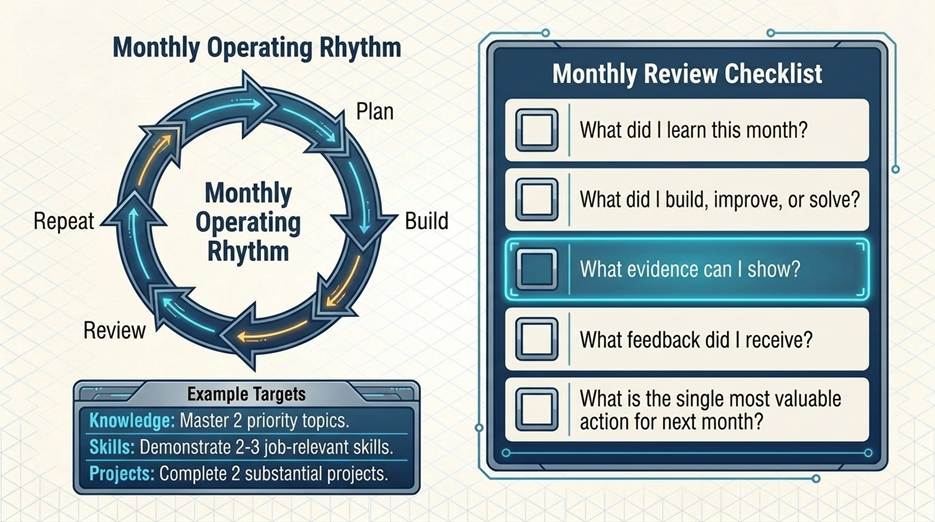
Monthly review questions
- What did I learn this month?
- What did I build, improve, or solve?
- What evidence can I show?
- What feedback did I receive?
- What is the single most valuable action for next month?
10. Career Capital Portfolio: Your Evidence Repository
Create a dedicated folder or digital portfolio to organize your accomplishments. It could include:
- Resume and target-role skill matrix.
- Project reports, technical diagrams, simulations, and code samples.
- Certifications and relevant course completions.
- Research papers, articles, posters, and presentations.
- Internship or work-experience summaries.
- Feedback, recommendations, and examples of team contributions.
- A monthly accomplishment log with measurable results where possible.
Respect employer confidentiality, intellectual property, data privacy, and any restrictions on sharing technical work. Use public, synthetic, or approved data when building a portfolio outside work.
A useful accomplishment statement follows this pattern:
Action + technical skill + outcome + evidence
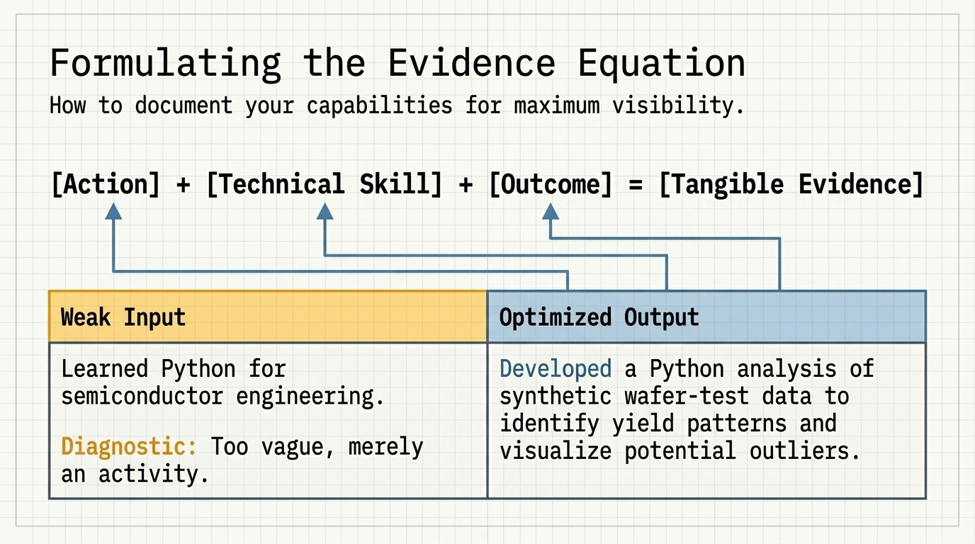
For example:
Instead of writing, “Learned Python for semiconductor engineering,” write, “Developed a Python analysis of synthetic wafer-test data to identify yield patterns and visualize potential outliers.”
The second statement gives a recruiter or hiring manager something concrete to discuss.
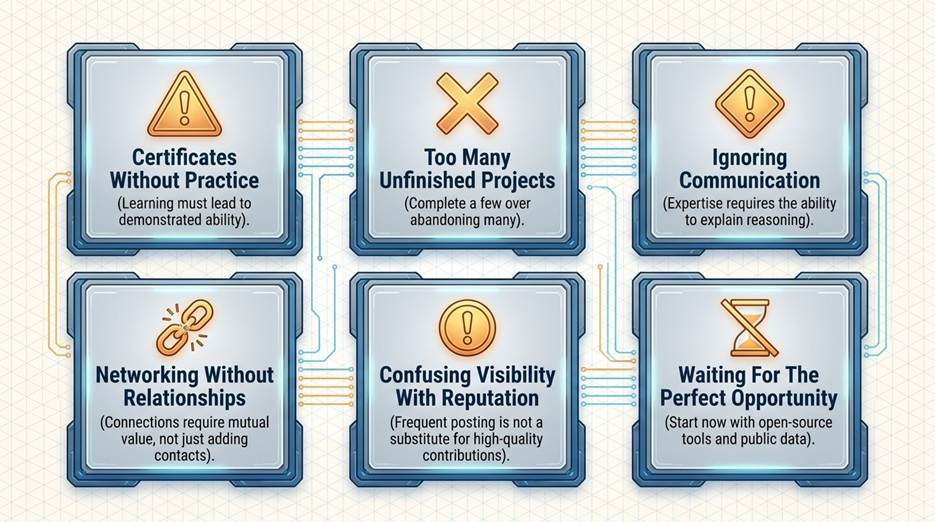
11. Common Career Capital Mistakes
- Collecting certificates without practicing: Learning should lead to demonstrated ability.
- Starting too many projects: Complete a few meaningful projects rather than leaving many unfinished.
- Ignoring communication: Technical expertise becomes more valuable when you can explain your reasoning and findings.
- Building a network without relationships: Meaningful professional connections require follow-through and mutual value.
- Waiting for the perfect opportunity: Use accessible projects, open-source tools, research opportunities, and practical exercises to start building evidence.
- Confusing visibility with reputation: Posting frequently is not a substitute for reliable, high-quality contributions.
- Failing to document accomplishments: Keep records while the details are fresh.
- Comparing yourself with everyone else: Assess progress against your goals and the requirements of your intended role.
12. Week 9 Final Challenge
The Career Capital Challenge
13. Key Takeaways
Career capital is not built in a single day. It develops through deliberate learning, practical application, meaningful relationships, consistent performance, and documented achievements.
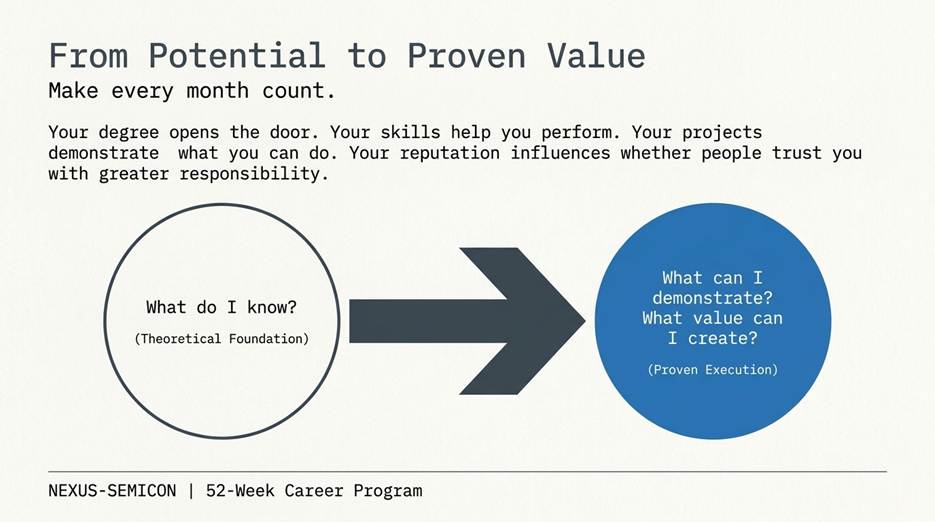
Your degree may help open the door. Your skills help you perform. Your projects demonstrate what you can do. Your reputation influences whether people trust you with greater responsibility.
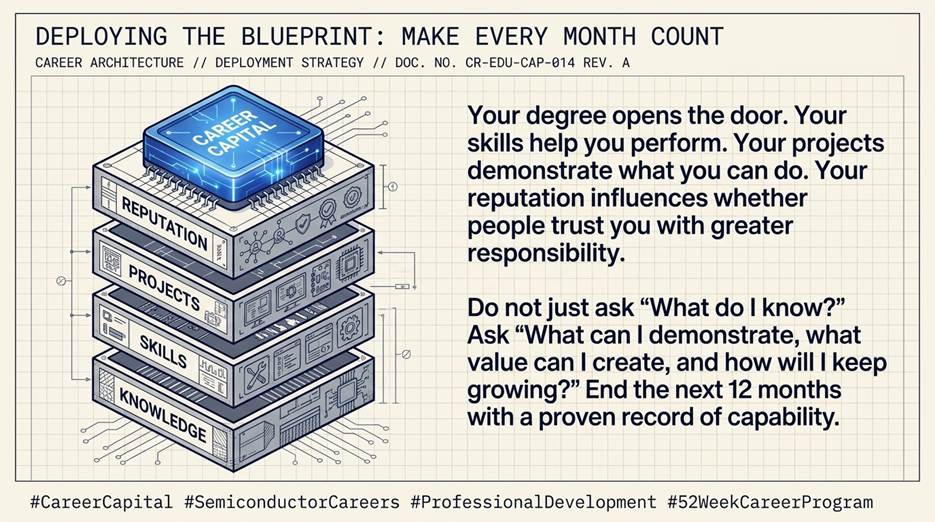
The most important question is not simply, “What do I know?” It is, “What can I demonstrate, what value can I create, and how will I keep growing?”
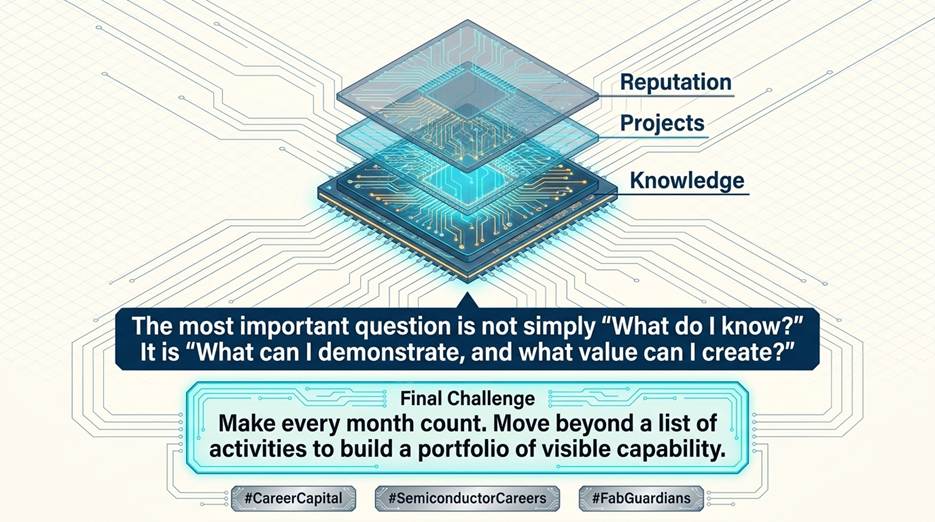
Make every month count. By the end of the next 12 months, aim to have more than a list of completed activities: have a stronger set of skills, tangible evidence of capability, meaningful professional relationships, and a clear direction for your next career step.
About NEXUS-SEMICON Program
The NEXUS-SEMICON Post Graduate Certificate Program from Guru Nanak Dev Global University of Texas, USA is a two-year, industry-oriented program designed to prepare engineering graduates and professionals for opportunities across the semiconductor and electronics ecosystem. Combining advanced semiconductor fundamentals with specialized learning in VLSI and semiconductor design, automotive electronics, AI hardware, MEMS and sensors, advanced packaging, and embedded and intelligent systems, the program connects technical knowledge with practical application, projects, and industry exposure. Its distinctive Earn While Learn pathway is designed to help learners build professional experience alongside their education, subject to eligibility and available opportunities. With a hybrid learning model available in Navi Mumbai and Chandigarh in India, NEXUS-SEMICON aims to bridge the gap between engineering education and industry needs—helping learners learn the technology, build practical skills, gain experience, and prepare for the semiconductor careers of tomorrow.
#CareerCapital #SemiconductorCareers #ProfessionalDevelopment #CareerGrowth #SemiconductorIndustry #52WeekCareerProgram